Proposed livestreamed execution raises concerns
Defense Sec. Hegseth announced Ft. Hood shooter’s execution would be livestreamed
WASHINGTON (Gray DC) - The first livestreamed execution in American history has forced the country to ask itself an uncomfortable question: is this who we are?
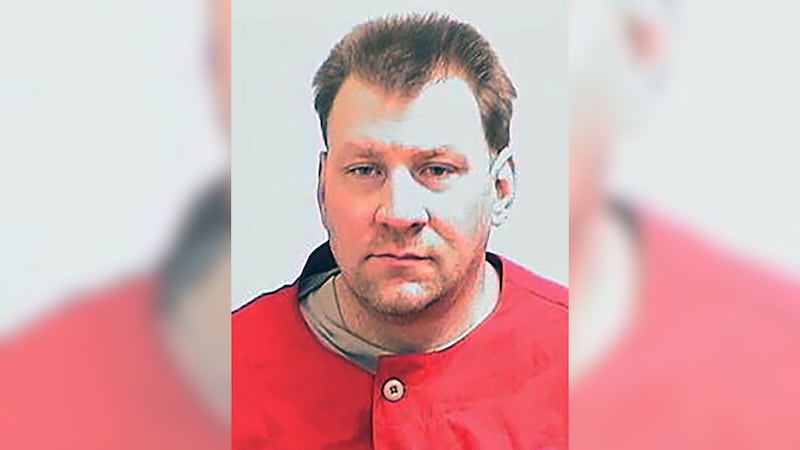
Nidal Hasan is scheduled to be executed by firing squad December 3 at Fort Hood. Hasan killed 13 people and wounded 32 others in a 2009 mass shooting at the Texas Army base. It would be the first military execution since 1945, and the first public execution since 1937.
Secretary of Defense Pete Hegseth announced the unprecedented decision October 7 during an interview with the conservative broadcast outlet Real America’s Voice. President Donald Trump doubled down and backed Hegseth’s decision late last week.
“Exposure to graphic images of that kind of violence is not good for you,” said Alison Holman, a psychology professor at UC Irvine who specializes in collective trauma.
Her research has shown that witnessing graphic violence can cause post-traumatic stress disorder symptoms.
“Our team has had young people reaching out from across the country saying they’ve seen these acts of horrific violence,” Holman said about her research into the long-term impacts of witnessing trauma. “I’m not saying that it will cause PTSD, but… it is definitely associated with PTSD symptoms that are distressing and can increase a person’s sense of worry about the future and can disrupt their ability to function.”
Many Republicans quickly shared concern about what a state-sanctioned live execution would do to America’s collective humanity.
“Seneca warned that Rome’s bloody spectacles corrupted the people who watched them,” Sen. John Curtis (R-Utah) wrote on X. “The victims deserve justice administered with solemnity. Broadcasting a death diminishes us and is not an effective deterrent. I urge him to reconsider.”
Rep. Tom Barrett (R-Mich.), who is a veteran running for re-election in a swing district, shared similar concerns.
“Secretary Hegseth should seriously reconsider this decision,” Barrett wrote on X last week. “The victims deserve justice administered with solemnity. Broadcasting a death diminishes us and is not an effective deterrent. I urge him to reconsider.”
Across the world, Pope Leo reiterated his opposition to the death penalty as a whole. Pietro Parolin, the Vatican Secretary of State, said in part, “It is certainly unacceptable to turn death into a spectacle.”
Vice President JD Vance, who is Catholic, stopped short of opposing the livestream, but said he wouldn’t watch. Holman urges people not to watch, but knows that is difficult in this technological age.
“You could open up a social media account and a video would start on its own, by itself, auto-start, and you could see something before you really had a chance to turn it off,” Holman explained.
Holman said a public execution goes against current American culture, but is painfully reminiscent of a darker time, when lynchings of mostly Black people took place, particularly in the South.
“[A lynching] was considered something that they should all go and watch,” said Holman. “So I guess in some ways, the live streaming of this really isn’t totally counter to our culture, but it’s bringing back a part of our culture that we had put behind us.”
The Federal Bureau of Prisons bans the recording and broadcasting of executions, but Hasan’s case is through military courts, which have a whole other set of governing rules.
A public or video-distributed execution, by any method, is exceptionally rare in the 21st century. Recent examples include Iran, Somalia and videos of beheadings from the Taliban and ISIS.
Shortly after Hegseth posted on X confirming his decision, Rep. Austin Scott (R-Ga.) quoted it to add his concern.
“I absolutely support the sentence of death,” Scott started. “But live-streaming executions is what jihadists do. America is better than that.”
Some, including House Speaker Mike Johnson, have shared concerns a video of executions — particularly an ideological extremist like Hasan — would serve as a recruitment tool for America’s adversaries.
Legal proceedings could delay the execution, which is common in death penalty cases. If Hasan faces the firing squad in December, it is unclear what a livestream would logistically look like and if any media outlet or digital platform would be willing to share any part of it.
When asked about the possible livestream as he departed for Alaska, President Trump would only confirm “they’re looking at it.”
Copyright 2026 Gray DC. All rights reserved.